Replacing an old oil heating system with a heat pump is worth considering in many Swiss homes. Whether the solution fits depends on the building’s condition, heat distribution, flow temperature, location, dismantling effort, tank disposal and subsidy conditions. In addition to the heat pump itself, domestic hot water, storage tanks, electrical work, sound insulation and possible adjustments to the heating system must be taken into account.
Those who plan early avoid emergency solutions in case of failure of the old heating system and can check subsidy options in good time.
The most important points in brief
- Replacing an oil heating system is a typical application case for heat pumps.
- Tank decommissioning, dismantling, and disposal should be included as separate items in the quote.
- Subsidies are often worth considering when replacing fossil fuel heating systems, but they vary by canton and are not guaranteed.
- Flow temperature, radiators and insulation determine efficiency and suitability.
- The heat pump should not be sized based on the old boiler output.
- For a single-family home, SwissEnergy provides official guideline values of approx. CHF 45’000–85’000 including installation and storage, depending on the type of heat pump.
- As of 12.07.2026
- Sources at the end of the article
When does the replacement pay off?
A switch to a heat pump should be considered if:
- the oil heating system gets older or needs to be repaired more frequently,
- the oil tank would need to be remediated, decommissioned or replaced,
- an energy renovation is already planned,
- the building envelope has already been partially improved,
- moderate flow temperatures are possible,
- subsidies are available at the location,
- the dependence on heating oil is to be reduced.
A replacement should not only be planned when the heating system completely fails. Subsidy applications, quotes, permit issues and delivery times require lead time.
Cost blocks for replacement
As of July 2026. The official reference values from SwissEnergy refer to heat pumps including installation and storage:
| Heat pump type | Guideline value for single-family homes according to SwissEnergy |
|---|---|
| air-to-water heat pump | approx. CHF 45,000–60,000 |
| Brine-to-water heat pump with borehole heat exchanger | approx. CHF 55,000–80'000 |
| water-to-water heat pump | approx. CHF 60,000–85,000 |
When replacing an oil heating system, project-specific items are added. These should not be estimated as a lump sum but listed individually in the quote:
| Cost block | What to look out for? |
|---|---|
| Heat pump | Type, output, manufacturer, sizing |
| Domestic hot water and buffer tank | Comfort, storage size and efficiency |
| Dismantling | old boiler, pipes, possible flue gas system |
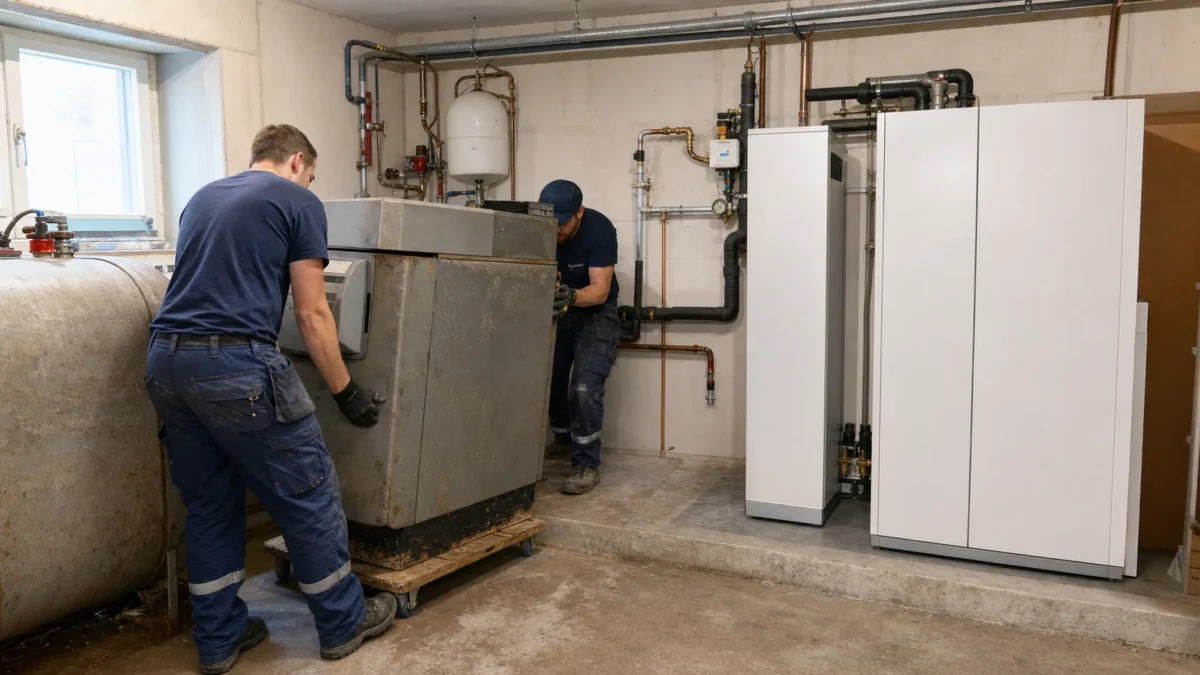
| Oil tank | Clarify decommissioning, cleaning or removal professionally |
| Electrical work | Connection, protection and control |
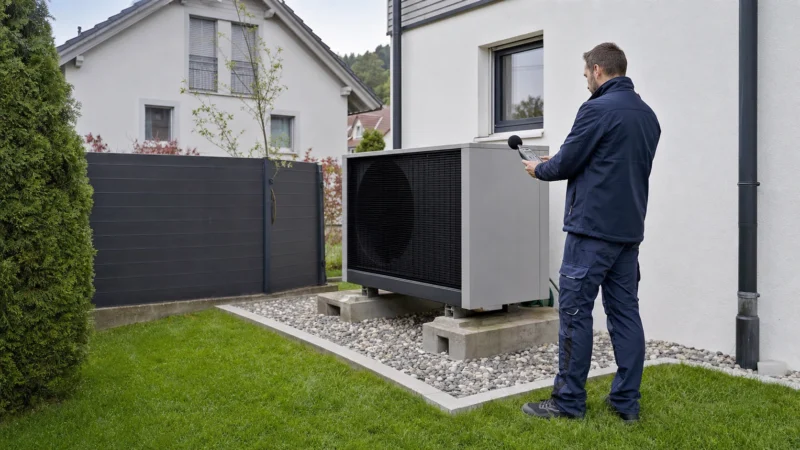
| Sound insulation | especially with air-to-water heat pumps |
| Radiators / heat distribution | if low flow temperatures cannot be achieved |
| Subsidy | to be checked on a site-specific basis before implementation |
An overall overview is provided by What does a heat pump cost in Switzerland?. Subsidies can reduce the net costs – more on this under heat pump subsidy Switzerland 2026.
Compare quotes for free Do you want to replace your oil heating system and know what this means for your building? Through waermepumpen-guide.ch, you can submit your request free of charge and without obligation. Your request will be forwarded to up to three suitable specialist installers in your region who will create individual quotes. Compare quotes for free
What happens to the oil tank?
The oil tank must be decommissioned or removed professionally. Depending on the situation, this includes emptying, cleaning, securing, dismantling and disposal. The effort depends on the type of tank, size, location and condition. For buried tanks, the effort may be higher than for a well-accessible tank in the basement.
Important: Tank work should be listed separately in the quote. Only then can quotes be compared on a like-for-like basis.
Check flow temperature and radiators
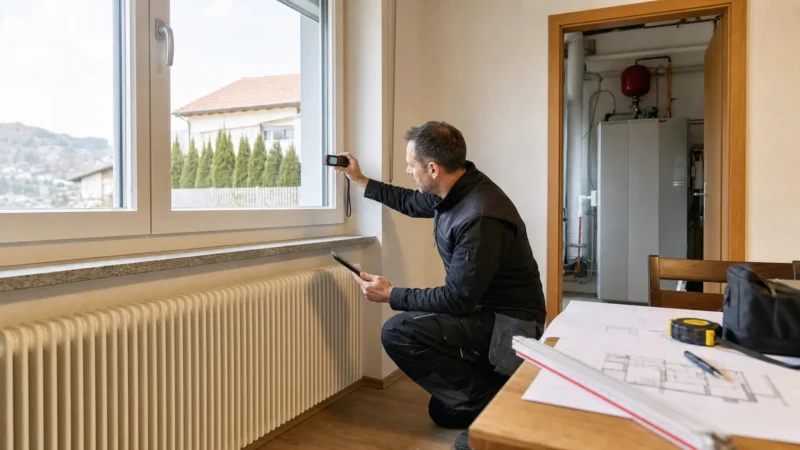
The old oil heating could also deliver high flow temperatures. A heat pump works more efficiently when it can operate with low flow temperatures. Therefore, radiators, underfloor heating, insulation and heat demand must be checked.
SwissEnergy points out that heat pumps can be connected to existing heating systems with radiators or underfloor heating. However, an efficient operation requires a good building envelope and low flow temperatures. More on this: Heat pump in an older building.
Calculating the appropriate output
Oil bills from recent years help check the plausibility of past energy consumption. However, sizing the heat pump still requires a professional calculation of heat demand. The old boiler output should not be adopted without verification, as older boilers were often designed with safety margins.
More on this: Sizing a heat pump.
Subsidy for replacing oil heating
The replacement of a fossil fuel heating system is relevant for subsidies in many cantons. The Buildings Programme is implemented at cantonal level: the cantons individually determine which measures they subsidise under which conditions. GEAK Plus, quality certificates or other conditions may be required in some cases.
Important:
- Check subsidy before implementation.
- Application generally to be submitted before construction begins.
- Take the canton, municipality and energy supplier into account.
- Do not plan on the subsidy as guaranteed.
- Have the assumptions in the quote transparently stated.
Process step by step
- Collect previous energy consumption: Have oil invoices from recent years ready.
- Check the building: Assess insulation, windows, radiators and flow temperature.
- Clarify domestic hot water: Plan storage size and domestic hot water demand.
- Compare heat pump types: air-to-water, borehole or other solution depending on the location.
- Size the output: Have the heat demand professionally calculated.
- Plan tank decommissioning: Clarify tank type, accessibility and disposal route.
- Check for subsidy: Submit application before implementation.
- Request quotes: Compare services, dismantling, sound insulation and subsidy.
- Schedule implementation: Consider delivery times, heating interruption and commissioning.
Calculate dismantling and tank disposal transparently. Specialist installers can itemise these costs individually within the quote. Through waermepumpen-guide.ch you can reach up to three suitable specialist installers from your region – free of charge and without obligation. Compare quotes for free
Typical errors
- Submitting the subsidy application only after construction has begun.
- Leaving tank decommissioning or disposal out of the quote.
- Using the old boiler output without verification.
- Not checking flow temperature and radiators.
- Addressing sound insulation for an air-to-water heat pump too late.
- Treating domestic hot water and storage only as secondary matters.
- Comparing only the final price, not the scope of work.
Checklist before replacement
- Oil consumption in recent years
- Age and condition of the oil heating system
- Tank type, location and accessibility
- Flow temperature and radiators
- Domestic hot water demand and storage
- Location for the outdoor unit or plant room
- Subsidy options and application deadline
- Dismantling of the boiler, pipes and tank
- Service, warranty and timeline
For replacement, the air-to-water heat pump is often the most practical solution because no drilling is required. At the same time, noise protection for heat pumps should be checked before the site decision; a combination of heat pump and photovoltaic system can then reduce grid consumption.
When is it worth comparing multiple quotes?
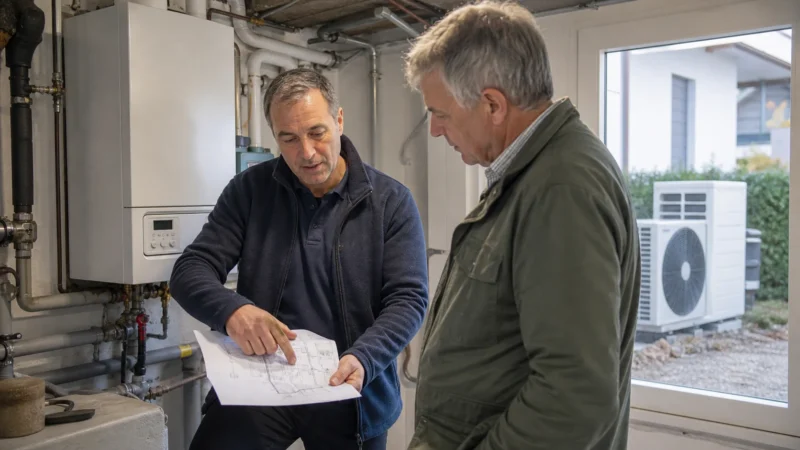
In the case of oil heating replacement, the greatest differences arise in dismantling, tank decommissioning, system choice, heating output, sound insulation and subsidy assumptions. Two to three complete quotes help to make these differences visible. What you should pay attention to is shown in the Checklist for comparing quotes.
Conclusion
Replacing an oil heating system is a good opportunity to review the entire heating system. Crucial factors are not only the type of heat pump and purchase costs, but also dismantling, tank decommissioning, flow temperature, domestic hot water, sound insulation and subsidies. Clarifying these points early on and comparing several complete quotes leads to a robust decision.
Compare heat pump quotes Through waermepumpen-guide.ch, you can submit your request free of charge and without obligation. Your request will be forwarded to up to three suitable specialist installers from your region, who will prepare individual quotes. Compare quotes for free
Frequently asked questions and answers
Can every oil heating system be replaced by a heat pump?
Not automatically. The building, flow temperature, radiators and domestic hot water demand must be checked. In many cases, replacement is feasible.
What happens to the oil tank?
It must be decommissioned or removed professionally. The effort depends on tank type, location and condition and should be quoted separately.
Is there a subsidy for replacing an oil heating system?
Often yes, depending on the canton and municipality. The application usually has to be submitted before construction begins; the subsidy is not guaranteed.
How long does the replacement take?
This depends on planning, subsidy procedures, delivery times, dismantling and installation. Early planning avoids emergency solutions.
What does it cost to replace an oil heating system with a heat pump?
For the heat pump itself, SwissEnergy quotes approximately CHF 45'000–85'000 depending on the type, including installation and storage. Dismantling, tank decommissioning and additional work must be quoted on a project-specific basis.
Sources and further information
- SwissEnergy / Swiss Federal Office of Energy (SFOE): Heating replacement, heat pumps and cost benchmarks
- The Buildings Programme: Subsidy for replacing fossil fuel heating systems and cantonal implementation
- Energiefranken: Subsidy programmes by location
- Swiss Heat Pump Association (FWS): planning and quality
- Cantonal regulations and specialist offices: tank decommissioning, tank disposal and heating replacement