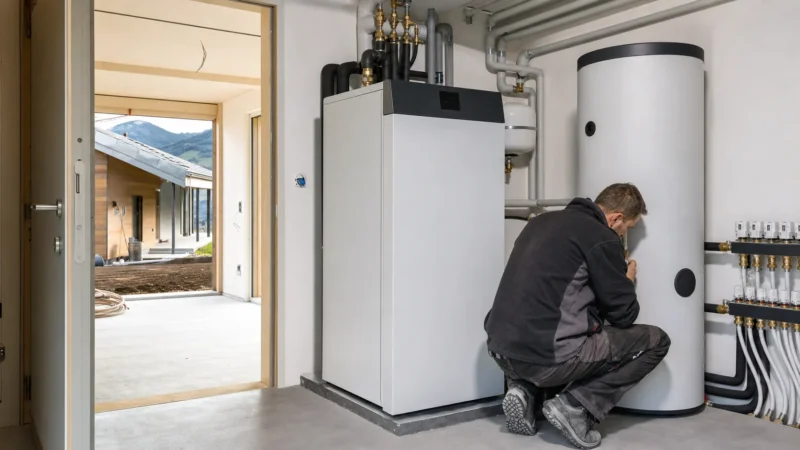
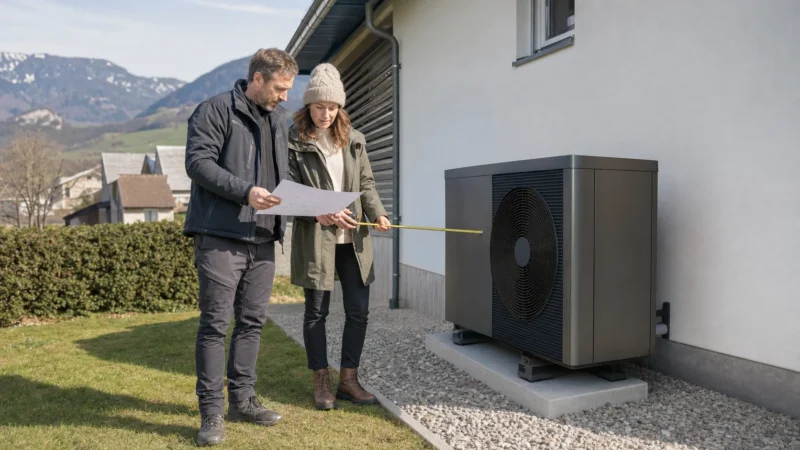
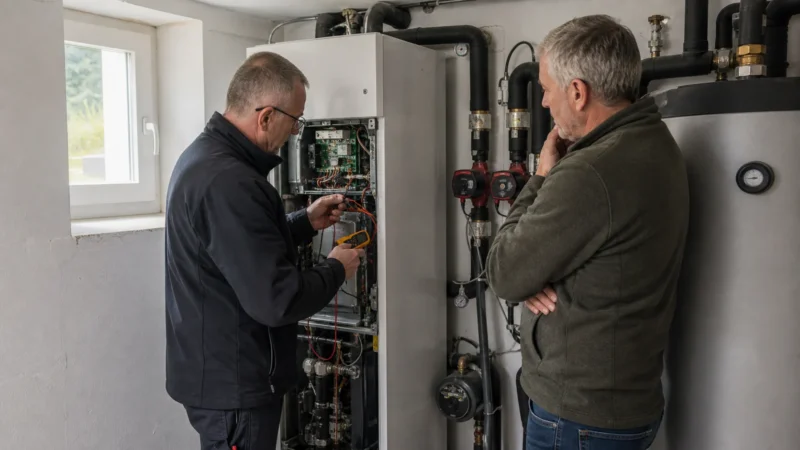
The brine-to-water heat pump uses the ground as a heat source. Because temperatures in the soil remain stable throughout the year, it often operates particularly efficiently – even in winter. The heat is extracted via a frost-protected brine fluid, usually with a borehole heat exchanger. This makes the system more intensive in terms of permits and planning than an air-to-water heat pump; however, it runs quietly and delivers stable efficiency.
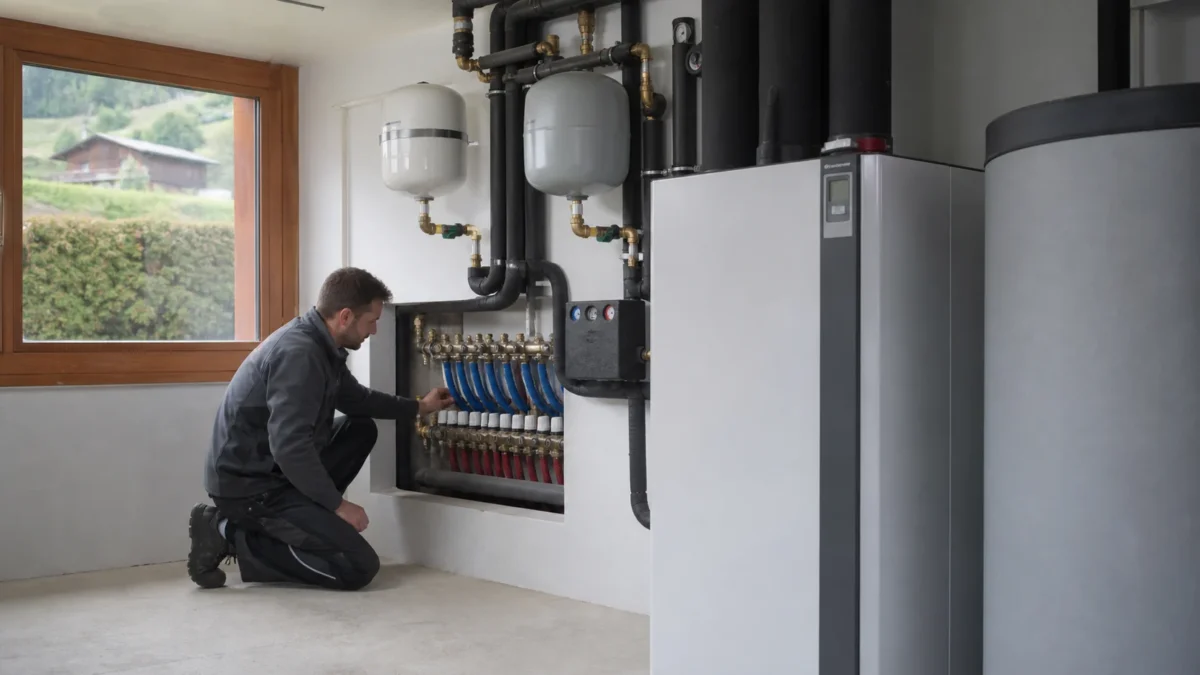
The most important points in brief
- uses the ground as a constant heat source
- usually high and stable efficiency, even in winter
- heat is often extracted via a borehole heat exchanger; depending on the plot, ground collectors or energy piles may also be an option
- Investment higher than with air-to-water
- Permit and geological suitability are crucial
- particularly interesting for long-term use
- As of 12.07.2026
- Sources at the end of the article
How it works
A brine fluid circulates in pipes in the ground and absorbs heat there. The heat pump raises this temperature level using electricity and supplies heating and domestic hot water. Because the ground temperature barely drops in winter, efficiency remains comparatively constant – a significant difference from the air-to-water heat pump, whose efficiency declines on cold days.
Borehole heat exchanger, ground collector or energy piles?
Brine heat can be harnessed in three ways:
| Variant | Note |
|---|---|
| Borehole heat exchanger | vertical borehole, space-saving, most common variant |
| ground collector | horizontal, laid flat, requires a large amount of undeveloped land |
| energy piles | Use of the building foundation, special case in new builds |
Heat is often extracted via a borehole heat exchanger because it requires little space. All details on drilling, permits and the process can be found under borehole heat pump.
Compare quotes for free Are you considering whether a brine-to-water heat pump is possible at your location? Through waermepumpen-guide.ch, you can submit your request free of charge and without obligation. Your request will be forwarded to up to three suitable specialist installers in your region who will check the suitability and effort involved. Compare quotes for free
Permit and geological suitability
Borehole drilling requires a permit; the responsible authority is usually the cantonal office for the environment or the cantonal geology department. Groundwater protection, geology, and distance requirements determine permissibility – in certain protection zones, boreholes are restricted or not allowed. This clarification should take place early on. It is an overview and not legally binding information; the binding review is carried out by the specialist installer with the relevant authority.
Advantages and disadvantages
| Category | Points |
|---|---|
| Advantages | high, stable efficiency, very quiet operation, no visible outdoor unit, long service life of the source |
| Disadvantages | higher investment, permit, drilling or laying effort, longer implementation time |
Compared to the air-to-water heat pump, the brine-to-water variant excels in efficiency and quietness, but requires more planning and a suitable plot. Which solution fits depends on location, building and budget.
Costs
As of July 2026. For a single-family home, SwissEnergy typically cites costs between CHF 55'000 and 80'000 for a brine-to-water heat pump with a borehole heat exchanger, including installation and storage. The drilling of the borehole heat exchanger alone costs approximately CHF 15'000–25'000, including installation. For ground collectors or other heat sources, the effort depends heavily on the plot and the project. In addition, there are costs for the unit, storage, electrical work, permit, and – in the case of heating replacement – the dismantling of the old system. The higher investment can be partially offset over the years by the stable efficiency. A comprehensive overview is provided in What does a heat pump cost in Switzerland?, and for consumption, see Electricity consumption of a heat pump.
Get a transparent calculation of the effort. Especially in the case of brine-to-water systems, it is worth having several specialist installers assess the source, permit and equipment. Through waermepumpen-guide.ch you can reach up to three suitable specialist installers from your region – free of charge and without obligation. Compare quotes for free
Who is it suitable for?
The brine-to-water heat pump is particularly interesting when long-term efficiency and quiet operation are in the foreground, sufficient space for drilling or a collector is available, and the location is geologically suitable. In new builds, it can often be easily integrated; in renovations, it is a high-quality option, provided the prerequisites are met.
Typical errors
- Clarifying geology and permits too late. Without permission to proceed, the plans become invalid.
- Undersizing the heat source. An undersized borehole heat exchanger reduces efficiency.
- Comparing only the equipment price. Drilling, permits and expert reports also need to be included.
- Underestimating implementation time. Procedures and drilling require lead time.
Checklist before the quote
- check (or have checked) geological suitability and groundwater protection
- determine the heat demand and the suitable source (borehole/collector)
- Clarify the permit process and jurisdiction
- Itemise drilling/collector, unit, storage, electrical work and dismantling separately
- Check subsidy options at the location
- plan a realistic timeline including procedures
Before making a decision, the design and framework conditions should be reviewed together. The sizing of the heat pump determines the required borehole or collector output, while the heat pump subsidy 2026 influences the net costs. In a new build with a heat pump, the heat source can be integrated into the planning at an early stage.
When is it worth comparing multiple quotes?
With brine-to-water solutions, the greatest differences arise in the source, sizing, permit effort and equipment. A comparison of several specialist installers makes these visible. Two to three complete quotes are usually sensible for this purpose. What you should pay attention to is shown in the Checklist for comparing quotes.
Conclusion
The brine-to-water heat pump is a high-quality, efficient solution – provided the location and budget are suitable. Because geology and permits play a major role, early clarification and a quote that transparently lists the source, permit and effort are worthwhile. Multiple offers help to compare the differences realistically.
Compare heat pump quotes Through waermepumpen-guide.ch, you can submit your request free of charge and without obligation. Your request will be forwarded to up to three suitable specialist installers from your region, who will prepare individual quotes. Compare quotes for free
Frequently asked questions and answers
What is a brine-to-water heat pump?
A heat pump that uses heat from the ground – usually via a borehole heat exchanger, less commonly via ground collectors or energy piles.
Is drilling required?
Yes, for the common borehole heat exchanger variant. Ground collectors are laid out over a large area and require a lot of undeveloped space for this.
What does a brine-to-water heat pump cost?
For a single-family home with a borehole heat exchanger, SwissEnergy quotes roughly CHF 55’000–80’000 including installation and storage. The actual costs depend on the source, the building and the permit effort (as of July 2026).
Is it quieter than an air-to-water heat pump?
Usually yes in the outdoor area, as no outdoor unit is required. Indoor noise is mainly relevant.
Who is it suitable for?
For sites with suitable geology and sufficient space, where long-term efficiency and quiet operation are important.
Sources and further information
- SwissEnergy / Swiss Federal Office of Energy (SFOE): Fundamentals and efficiency of heat pumps
- Cantonal environmental offices or cantonal geology: Permit and admissibility of borehole heat exchangers
- The Buildings Programme: cantonal subsidy logic for heating replacement (as of 2026)
- Energiefranken: Subsidy programmes by location
- Swiss Heat Pump Association (FWS): Planning, sources and operation