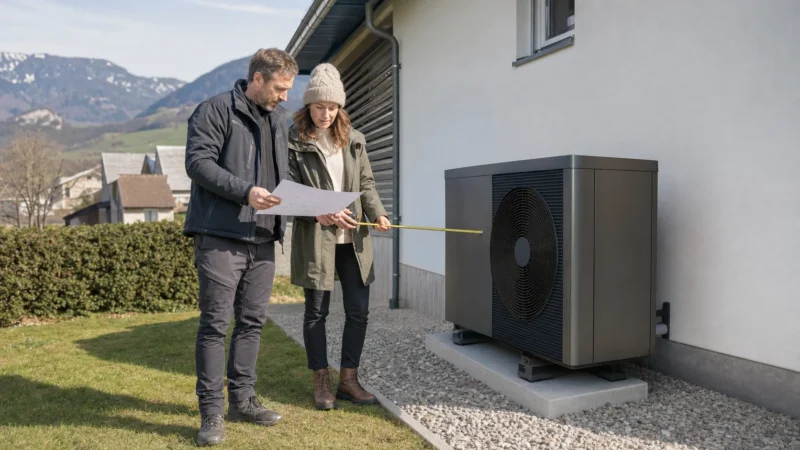
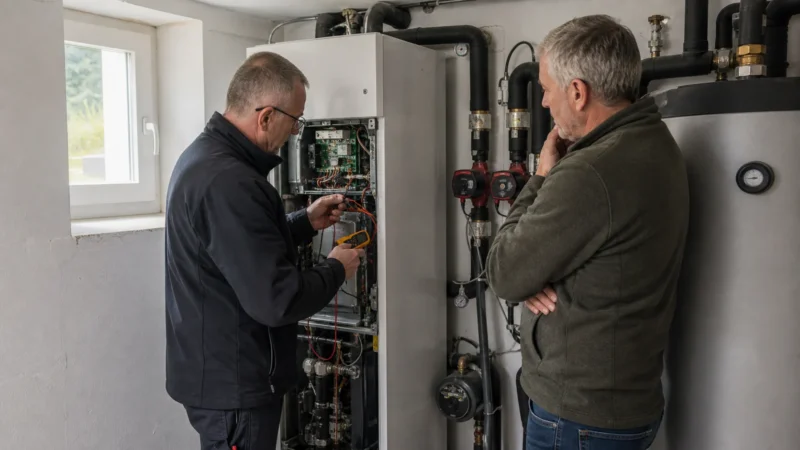
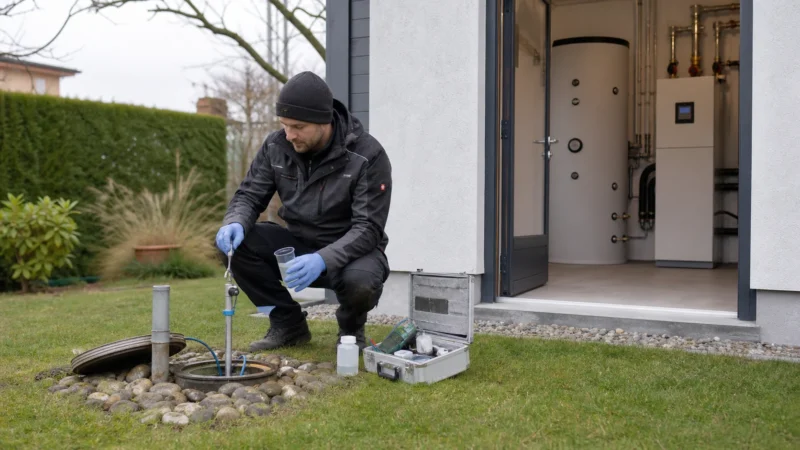
In a new build, a heat pump can be planned particularly well. According to SwissEnergy, the share of buildings with a heat pump among new builds in Switzerland is 60 %. In many cantons, strict energy requirements apply to new builds; which specific regulations apply depends on the location. The building envelope, underfloor heating, domestic hot water, plant room and photovoltaic system can be coordinated from the start. This creates ideal conditions for low flow temperatures and efficient operation.
The most important points in brief
- New builds offer ideal conditions thanks to good insulation.
- Low flow temperatures and underfloor heating increase efficiency.
- Air-to-water and brine-to-water are common systems in new builds.
- Photovoltaics should be considered early on; cantonal regulations on self-generated electricity may be relevant depending on the location.
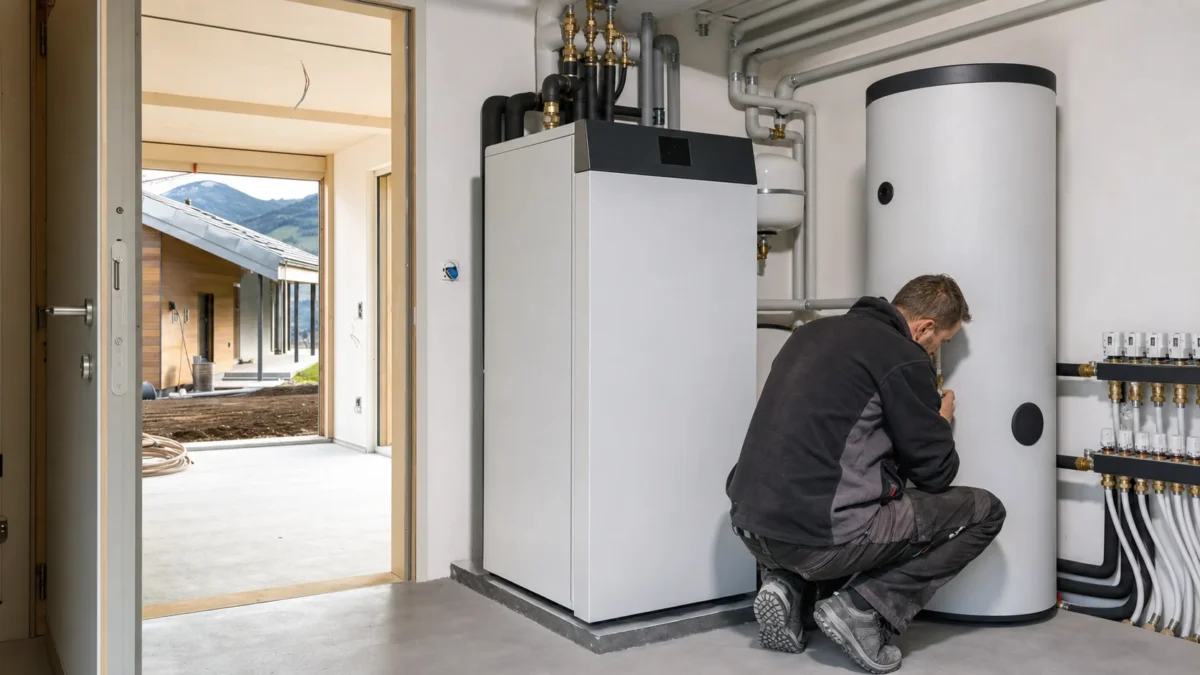
- Domestic hot water, storage and the plant room should be included in the early planning stage.
- Heat pump, PV and wallbox can be designed as an integrated system.
- As of 13.07.2026
- Sources at the end of the article
Why new builds are ideal
A new build has a low heat load, a good building envelope and freely planable heat distribution. This means: low flow temperatures, high efficiency and great design freedom regarding location, plant room and system choice. Unlike in renovation, no compromises need to be made on radiators or insulation.
Which heat pump is suitable for a new build?
| Type | Classification |
|---|---|
| Air-to-water | common, easy to implement, attractive price-wise |
| Brine-to-water (borehole) | very efficient, strong in the long term, permit required |
| water-to-water | only at a suitable location with groundwater |
| Domestic hot water | Only as a supplement for domestic hot water |
Details on the options: air-to-water heat pump and brine-to-water heat pump. No type is fundamentally “the best” – location, plot and budget decide.
Compare quotes for free Are you building new and looking to find the right heat pump system? Through waermepumpen-guide.ch, you can submit your request free of charge and without obligation. Your request is forwarded to up to three suitable specialist installers from your region, who will prepare individual quotes. Compare quotes for free
Photovoltaics from the start
In a new build, it is worth considering photovoltaics early on, as they can complement the heat pump effectively and cantonal requirements for self-generated electricity may be relevant depending on the location. Heat pumps and PV systems complement each other: solar power covers part of the heat pump’s electricity consumption, especially in the brighter half of the year, and the domestic hot water tank can store solar power indirectly as heat. While PV does not make the heat pump fully autonomous in winter, it noticeably reduces grid consumption. More on this: Heat pump with photovoltaics. The guide Planning a solar system with a heat pump explains in detail how system size, self-consumption and control can be coordinated.
Planning points at a glance
These points should be defined early – ideally already during the planning phase:
- Heating load and sizing (see Sizing the heat pump)
- Heat distribution (underfloor heating with low flow temperature)
- Domestic hot water demand and storage concept
- Plant room with sufficient space
- Location for the outdoor unit or area/drilling for the borehole heat exchanger
- Sound insulation (for air-to-water)
- Photovoltaic system and possible wallbox
- Subsidy options at your location
Plan the overall system in a coordinated manner. Specialist installers can consider the heat pump, storage, PV and control together within the quote. Through waermepumpen-guide.ch you can reach up to three suitable specialist installers from your region – free of charge and without obligation. Compare quotes for free
Costs in a new build
As of July 2026. Costs depend on the system, output and equipment. For a single-family home, SwissEnergy quotes approximately CHF 45’000–60’000 for an air-to-water heat pump including installation and storage tanks. Brine-to-water heat pumps with a borehole heat exchanger cost approximately CHF 55’000–80’000, and water-to-water heat pumps approximately CHF 60’000–85’000. In a new build, dismantling an old heating system is not required, but drilling, earthworks or additional assessments may be added depending on the system. A comprehensive overview is provided in What does a heat pump cost in Switzerland?. Note: Many subsidy programmes focus on replacing fossil fuel heating systems in existing buildings; whether contributions are available for new builds varies by canton.
Typical errors
- Planning the heat pump too late. The system and plant room should be included in the project early.
- Allowing too little space for the plant room. Storage and equipment need space.
- Forgetting domestic hot water. Consider the storage concept from the start.
- Not considering photovoltaics. Often mandatory anyway – and sensible.
- Addressing sound insulation only afterwards. Decide the air-to-water unit's location early.
Checklist for clients
- Make an early decision on system choice (air-to-water or brine-to-water)
- Calculate heating load and size the system accordingly
- Plan underfloor heating with a low flow temperature
- Provide sufficient space in the plant room
- Determine the domestic hot water and storage concept
- Plan photovoltaics and wallbox in advance
- Check subsidy options at the location
In addition to air and ground, a water-to-water heat pump can be considered at suitable locations. Regardless of the system, possible contributions should be clarified through the heat pump subsidy 2026, and the most common planning errors should be ruled out during the project design.
When is it worth comparing multiple quotes?
In a new build, the heat pump, PV and storage can be planned as an integrated system – and this is exactly where the concepts of specialist installers differ. A comparison of multiple quotes makes the system choice, sizing and equipment transparent. Two to three complete quotes are generally sensible for this purpose. What you should pay attention to is shown in the Checklist for comparing quotes.
Conclusion
A new build is the best time to plan the heat pump, photovoltaic system and domestic hot water as a coordinated overall system. Those who consider system selection, sizing, plant room and PV early on receive an efficient, future-proof solution. Multiple quotes help find the best concept.
Compare heat pump quotes Through waermepumpen-guide.ch, you can submit your request free of charge and without obligation. Your request will be forwarded to up to three suitable specialist installers from your region, who will prepare individual quotes. Compare quotes for free
Frequently asked questions and answers
Which heat pump is sensible for a new build?
Often air-to-water or brine-to-water. The choice depends on the plot, location and budget.
Does a new build need underfloor heating?
It is very sensible, as it operates with low flow temperatures and increases efficiency. The overall system is what matters.
Should photovoltaics be planned in advance?
Yes. In many cantons, self-generated electricity is already mandatory for new builds, and PV complements the heat pump well.
Is there a subsidy for new builds?
This varies by canton. Many programmes focus on the replacement of fossil fuel heating systems in existing buildings.
How much does a heat pump cost in a new build?
For a single-family home, SwissEnergy cites approximately CHF 45'000–60'000 for air-to-water heat pumps including installation and storage. Brine-to-water and water-to-water solutions are higher. Dismantling is not required, but drilling, earthworks or clarifications may be added depending on the system (as of July 2026).
Sources and further information
- SwissEnergy / Swiss Federal Office of Energy (SFOE): heat pumps and efficiency in new builds
- Cantonal energy laws: Requirements for fossil fuel heating and self-generated electricity in new builds
- The Buildings Programme / Energiefranken: subsidy programmes by location
- Swiss Heat Pump Association (FWS): Planning and system selection