A heat pump is the most common solution in Switzerland when an old oil, gas, or electric heating system is to be replaced. Anyone specifically weighing up a new gas heating system versus a heat pump should compare not only the investment but also operating costs, subsidies, and cantonal regulations. The heat pump uses ambient heat from air, soil, or groundwater to produce heating heat and domestic hot water. Whether it suits your property cannot be answered in general terms: decisive factors are the building’s condition, heat distribution, flow temperature, location, sound insulation, permit, and budget. This overview shows what types exist, what you can expect in terms of costs and subsidies, and what to look out for before requesting a quote.
The extent to which the heat pump has established itself in the market is shown by the figures: In Switzerland, around 50'000 heat generators are sold per year, and the share of renewable systems among them has risen from about half (2018) to approximately 88 percent (2023) (Source: Statistics from the Swiss Heat Pump Association (FWS) / EnDK). Around 23 percent of single-family homes already heat with a heat pump. After strong boom years, sales have recently normalised – but this does not change the long-term direction.
The most important points in brief
- Heat pumps use environmental heat from air, soil or groundwater and require electricity for this.
- The air-to-water heat pump is most common in single-family homes because it does not require drilling.
- The costs depend heavily on the scope of work; turnkey solutions for a single-family home are realistically around CHF 30’000–85’000 – depending on type and building.
- In older buildings, flow temperature, radiators and insulation decide, not the year of construction alone.
- Subsidies are regulated at cantonal level and are not guaranteed; the application must generally be submitted before construction begins.
- For air-to-water systems, sound insulation is central; for boreholes and groundwater, the permit is key.
- Obtaining multiple quotes makes differences in technology, scope and price visible.
- As of 13.07.2026
- Sources at the end of the article
How does a heat pump work?
A heat pump works like a refrigerator, only in reverse. It extracts heat from the environment – air, ground or water – and uses electricity to raise it to a temperature level suitable for heating and domestic hot water. The smaller the temperature difference between the heat source and the heating system, the less electricity the installation requires. This is precisely why a low flow temperature (the temperature at which the heating water enters the heat emitters) and a suitable heat distribution system are so important.
A key figure for this is the seasonal performance factor (SPF): It describes how much heat a heat pump generates over the year from one kilowatt-hour of electricity. An SPF of 4 means that, on average, 4 kWh of heat are generated from 1 kWh of electricity. The related term COP refers to the same ratio, but as an instantaneous value under test conditions. How the consumption is specifically composed can be read in detail under electricity consumption of a heat pump.
What types of heat pumps are there?
Four types are common in Switzerland. None of them is fundamentally 'the best' – it depends on location, building and budget.
| Type | Heat source | Typical suitability | What to look out for? |
|---|---|---|---|
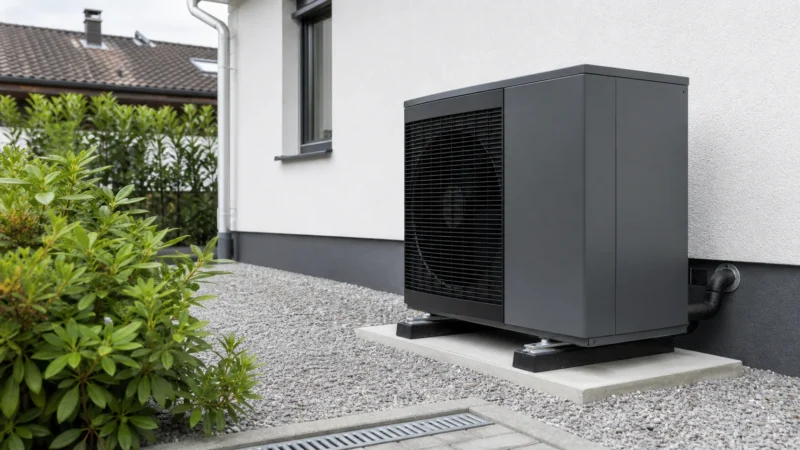
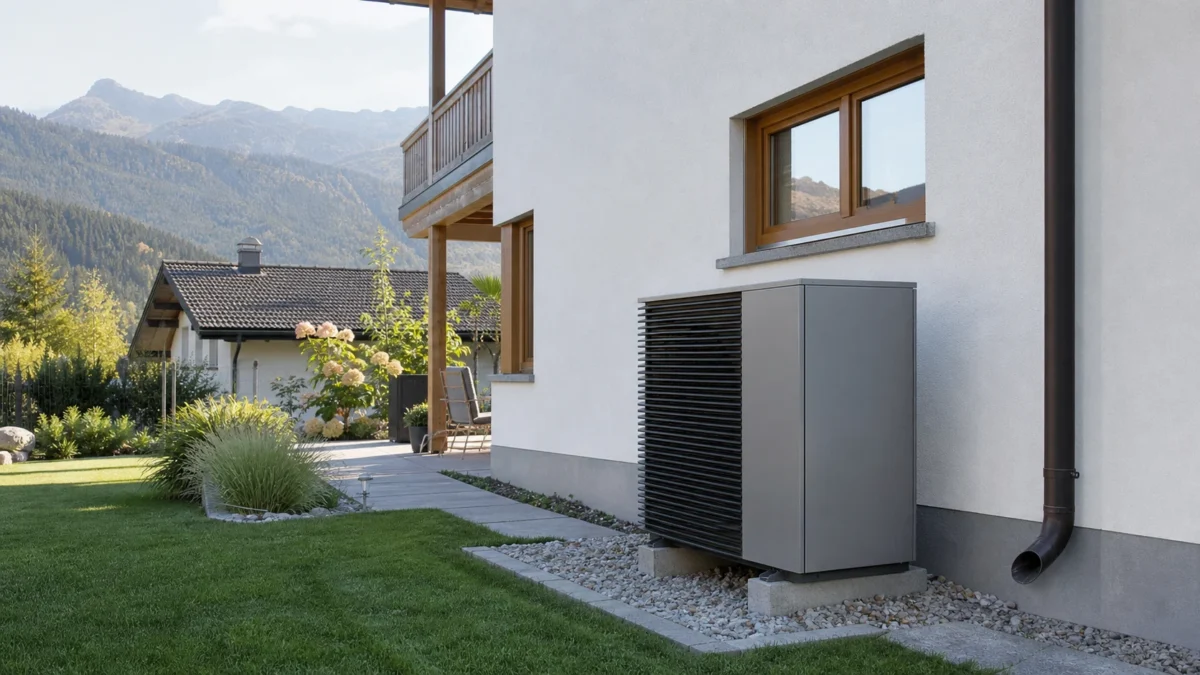
| air-to-water heat pump | Outdoor air | Most common choice for single-family homes, renovation as well as new build | Location and sound insulation, efficiency at low temperatures |
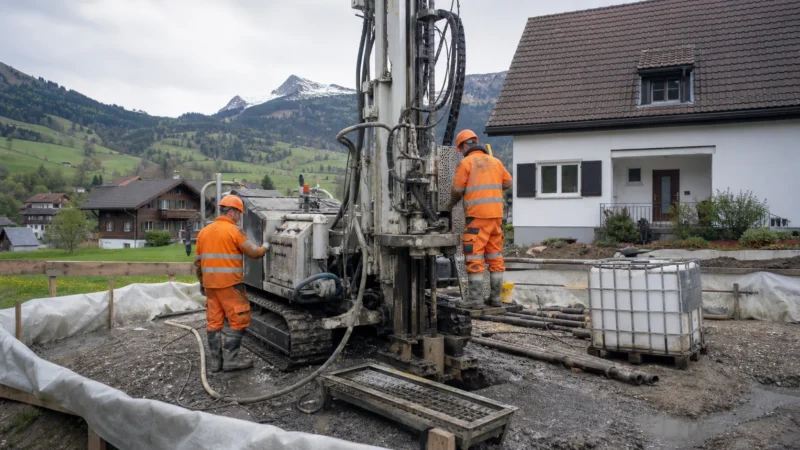
| Brine-to-water heat pump (borehole heat exchanger) | Soil | New build and demanding renovation with space for drilling | Drilling permit, geology, higher investment |
| water-to-water heat pump | Groundwater | highly efficient specialist solution at a suitable location | Concession, hydrogeological report, highly site-dependent |
| Domestic hot water heat pump | Room/ambient air | pure domestic hot water solution | does not replace a complete heating system |
The air-to-water heat pump has by far the largest market share because it does not require earthworks and can usually be retrofitted well. Details on function, advantages and disadvantages can be found under air-to-water heat pump and borehole heat pump.
What does a heat pump cost in Switzerland?
As of July 2026. A serious price indication is only possible as a range, as the final price depends on the scope of work: heat pump type, heating output, domestic hot water tank, electrical work, dismantling of the old heating system, tank disposal, sound insulation, any drilling and permits. Figures circulating online from 'from CHF 15'000' to over CHF 80'000 therefore often mean different things – sometimes only the unit, sometimes the turnkey system including all ancillary work.
The following indicative figures refer to a turnkey system in a single-family home and do not replace a quote:
| Heat pump type | Indicative cost for a single-family home (turnkey) | Key cost drivers |
|---|---|---|
| air-to-water heat pump | approx. CHF 30'000–55'000 | Outdoor/indoor unit, storage, sound insulation, electrical work, dismantling |
| Brine-to-water heat pump (borehole heat exchanger) | approx. CHF 50'000–80'000 | Drilling (often CHF 15’000–25’000), permit, geology |
| water-to-water heat pump | approx. CHF 55’000–85’000 | Wells, groundwater concession, expert report |
| Domestic hot water heat pump | significantly lower | Domestic hot water only, no full heating |
There are also ongoing costs. Annual operating costs (electricity) for a single-family home are roughly CHF 500–2'000, depending on heat demand, efficiency and electricity tariff, while maintenance is around CHF 250–450 per year. What matters for the decision is not the lowest equipment price, but the total calculation of investment, efficiency and operation. A cheap but poorly designed system can end up more expensive over the years than one that has been carefully planned. More on this: What does a heat pump cost in Switzerland?
Compare quotes for free You are planning to replace your heating and want to know which heat pump suits your building and what it costs? Through waermepumpen-guide.ch you can submit your request free of charge and without obligation. Your request is forwarded to up to three suitable specialist installers in your region. This way, you receive individual quotes and can compare prices, services, and recommendations. Compare quotes for free
Older buildings, new builds and heat distribution
In a new build, a heat pump can usually be planned without problems: good insulation, low flow temperatures, and generally underfloor heating create ideal conditions (see Heat pump in a new build).
In an older building, more scrutiny is required – but an advanced year of construction is not a reason for exclusion. What matters is at what flow temperature the house gets warm. As a rough guide: up to around 35 °C, the conditions are very good; in the range of 35–50 °C, a heat pump is often well feasible; and from about 50–55 °C upwards, it should be checked more closely whether better insulation, hydraulic balancing or the replacement of individual radiators makes sense. Existing radiators are not a fundamental problem if they are sufficiently large. Further reading: Heat pump in an older building and Heat pump with radiators.
A GEAK (cantonal building energy certificate) helps to assess your own building, sometimes with an advisory report (GEAK Plus). It shows the energy status and possible measures – and is in some cantons also a prerequisite or additional criterion for subsidy contributions.
Permit and noise protection
What needs to be permitted or reported varies by canton and municipality. You should clarify these points early on, never only after signing the contract:
- Air-to-water heat pump: In many cantons, the system is exempt from building permits but subject to notification and sound insulation requirements. The Noise Protection Ordinance applies; boundary distances (often around 3–5 m at cantonal level) and installation requirements apply to the outdoor unit. The location should therefore be determined right at the beginning.
- Borehole heat pump: Drilling requires a permit (cantonal environmental office or cantonal geology). In groundwater protection zones, boreholes are sometimes not allowed at all or only with a hydrogeological expert report. Procedures often take several weeks.
- Water-to-water heat pump: Groundwater use generally requires a cantonal concession and a hydrogeological report – the most permit-intensive case.
This is an overview and not legally binding information. What specifically applies in your municipality will be clarified by the specialist installer during planning.
Subsidies 2026
As of July 2026. In 2026 as well, the replacement of fossil heating systems with heat pumps is widely supported. The central instrument is the Buildings Programme of the federal government and cantons (financed among other things from the CO₂ levy, on the order of around CHF 450 million per year). Important: It is implemented cantonally, which is why there is no uniform flat rate – the amounts and conditions differ significantly in some cases, up to five figures in individual cantons.
Typical requirements for small systems (single- and two-family homes):
- The heat pump replaces an existing oil, gas or electric heating system.
- Electrically driven air-to-water, brine-to-water and water-to-water heat pumps are eligible for subsidies.
- A quality certificate is common – usually the Heat Pump System Module (WPSM) or a recognised quality seal; the quote often includes a performance guarantee from SwissEnergy.
- The application must be submitted before construction begins; retroactive applications are usually rejected. Payment is made after installation upon submission of the supporting documents.
Municipalities, energy suppliers (EVU) or programmes such as ProKilowatt may provide additional contributions. The Klimaprämie programme from Energie Zukunft Schweiz targets larger systems and does not apply to single-family homes – for these, the Buildings Programme is therefore the main option. Heating replacement and dismantling can also be deducted from tax as property maintenance in most cantons (less any subsidies received). Following the decision in 2025 to abolish imputed rental value, this deduction may cease to apply to direct federal tax, probably from 2028 – the current position should be checked.
Subsidy amounts are never guaranteed and must be checked on a location-specific basis. A good quote therefore indicates which subsidy options were assumed and who submits the application. You can delve deeper under Heat pump subsidies Switzerland 2026.
Consider funding options in the comparison The specialist partners check, as part of creating the quote, among other things, the existing heating system, heat distribution, possible locations and funding options at your location. Through waermepumpen-guide.ch you can reach up to three suitable specialist installers from your region – free of charge and without obligation. Compare quotes for free
Heat pump with photovoltaics
A photovoltaic system and a heat pump complement each other well: the self-generated solar electricity can cover part of the heat pump’s power demand, thereby increasing self-consumption. This is particularly suitable during the shoulder seasons and in summer – for example, for domestic hot water preparation. In winter, when heating demand is at its highest, the PV system produces the least; grid electricity then remains important. A PV system therefore does not fully supply the heat pump year-round. You can read how the two systems can be meaningfully coordinated under Heat pump with photovoltaics. The PV-side fundamentals regarding planning, self-consumption, and grid connection are explained in the Guide to photovoltaic systems in Switzerland.
Information you should have ready for planning
To enable a specialist installer to assess your project realistically, some key data points are helpful. This is not about a form, but about the technically relevant planning foundations:
- Type of property: Single-family home, apartment building or commercial – this determines output and system choice.
- Existing heating: Oil, gas, wood/pellets, electric heating or existing heat pump. This determines dismantling, subsidy eligibility and effort.
- Heat distribution: Radiators, underfloor heating or a mix – the most important indicator of the required flow temperature.
- Heated living area and number of people in the household: Basis for heating load and domestic hot water demand.
- Location and address: decisive for sound insulation, possible installation sites, drillability, and location-specific subsidies.
- Desired timeframe: so that approval and delivery deadlines can be planned realistically.
The more precise these details, the more reliable the quote – and the easier it is to compare multiple offers with each other.
Typical errors – what you should watch out for
- Reusing the old boiler output 1:1. Oil boilers were often oversized. A heat pump should be sized for actual heating load; otherwise it will cost more than necessary and run inefficiently.
- Not checking flow temperature and radiators. Especially in older buildings, this affects efficiency and comfort – a promise that «it will work without problems» without an assessment is a warning sign.
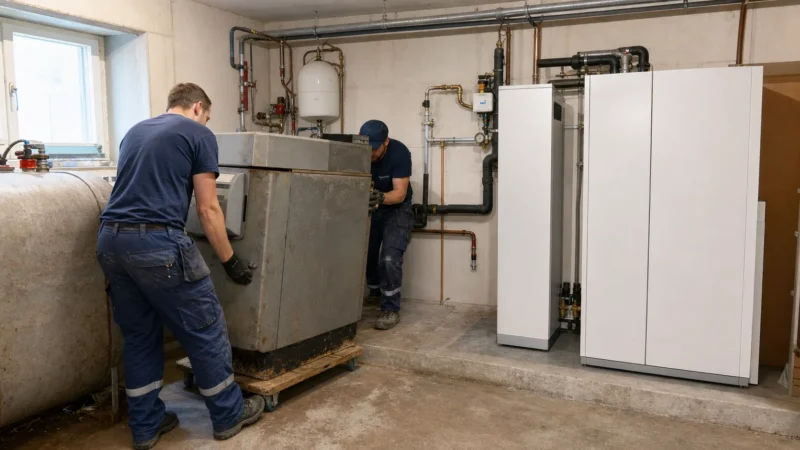
- Overlooking ancillary items. Dismantling, tank disposal, electrical work, storage and sound insulation belong in the quote. Without them, the comparison is distorted.
- Submitting the subsidy application too late. Applying after construction begins often means losing the entire entitlement.
- Underestimating the location of the outdoor unit. Noise levels and boundary distances should be clarified before ordering, not afterwards.
- Comparing only the total price. Two quotes can include the same equipment category yet differ substantially.
When choosing a system, it is worth taking a closer look at the heat source: A brine-to-water heat pump uses the ground without a visible outdoor unit, while a water-to-water heat pump requires suitable groundwater. For air-to-water projects, the noise protection for heat pumps should also be clarified early on.
When is it worth comparing multiple quotes?
Especially with heat pumps, quotes often differ significantly – for example in terms of heat pump type, heating output, domestic hot water, sound insulation, dismantling, subsidy assumptions and service. Comparing several specialist installers helps to make these differences visible and find the right solution for your property. Two to three comparable, complete quotes are usually sensible for this purpose. What you should pay attention to in detail is shown in the checklist for comparing quotes.
Checklist before the quote
- Current energy consumption (oil, gas or electricity) over the last few years
- flow temperature and condition of the radiators or underfloor heating
- Insulation, windows and the general condition of the building envelope
- Domestic hot water demand and number of people
- Possible location for the outdoor unit or space for drilling
- Permit and sound insulation issues at the location
- Subsidy options in canton and municipality
- Removal of the old heating system and tank disposal
Conclusion
A heat pump can be an excellent solution – provided the building, heat distribution system, location and budget are all compatible. More important than making a blanket choice of a specific system is thorough planning: correct sizing, a realistic assessment of the flow temperature, clarified permits and a quote that transparently shows all cost blocks. Those who obtain several offers will notice differences in technology, scope and price – and can make their decision on a solid basis.
Compare heat pump quotes Through waermepumpen-guide.ch, you can submit your request free of charge and without obligation. It is forwarded to up to three suitable specialist installers in your region, who review your information, clarify details about the property and prepare individual quotes. You decide whether to appoint an installer and which one. Compare quotes for free
Frequently asked questions and answers
Which heat pump is the most common in Switzerland?
In single-family homes, the air-to-water heat pump is the most widely used. It does not require drilling and can be retrofitted well in many cases.
Is a heat pump suitable for an older building?
Often yes, but not automatically. The decisive factors are flow temperature, radiators, insulation and domestic hot water demand. At high required temperatures, additional measures may be sensible.
What does a heat pump cost for a single-family home?
Turnkey roughly CHF 30’000–85’000, depending on type and building. Air-to-water is usually cheaper than borehole or groundwater solutions. A complete quote is decisive, not the unit price (as of July 2026).
Are there subsidies for heat pumps in 2026?
Yes, through the Buildings Programme of the federal government and cantons, and partly through municipalities and energy suppliers. The amount varies by canton and is not guaranteed; the application must generally be submitted before construction begins.
Does a heat pump require a permit?
This depends on the type and location. Air-to-water systems are often exempt from building permits in many places, but are subject to notification and sound insulation requirements. Borehole and groundwater solutions require a permit.
Does a photovoltaic system replace the grid electricity of the heat pump?
Not year-round. PV increases self-consumption, especially during the transitional period and in summer. In winter, grid electricity usually remains important.
Sources and further information
- SwissEnergy / Swiss Federal Office of Energy (SFOE): Fundamentals, efficiency and planning of heat pumps
- The Buildings Programme: Conditions and cantonal implementation of heating replacement (as of 2026)
- Energiefranken: Subsidy programmes based on location (canton, municipality, energy supplier)
- Swiss Heat Pump Association (FWS): Market and sales statistics, quality requirements (incl. WPSM)
- GEAK: cantonal building energy certificate and GEAK Plus
- Cantonal energy offices and environmental authorities: permit, noise protection and borehole heat exchangers