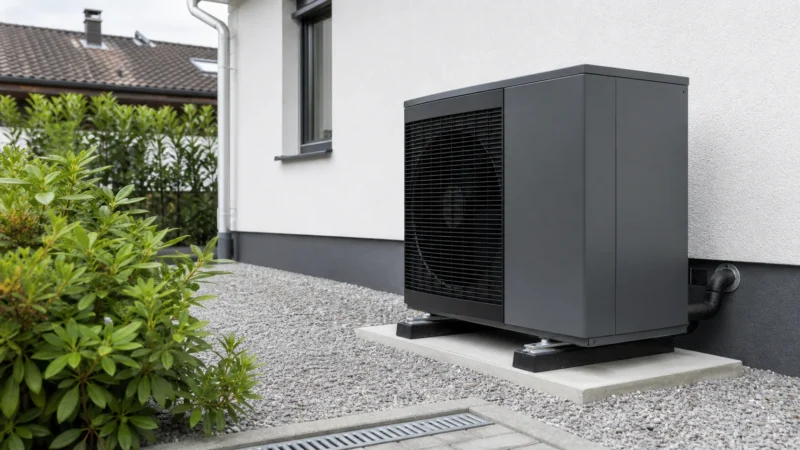
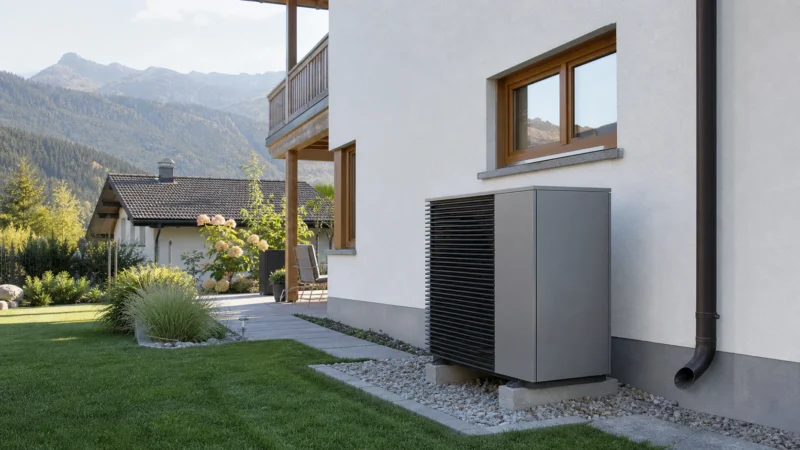
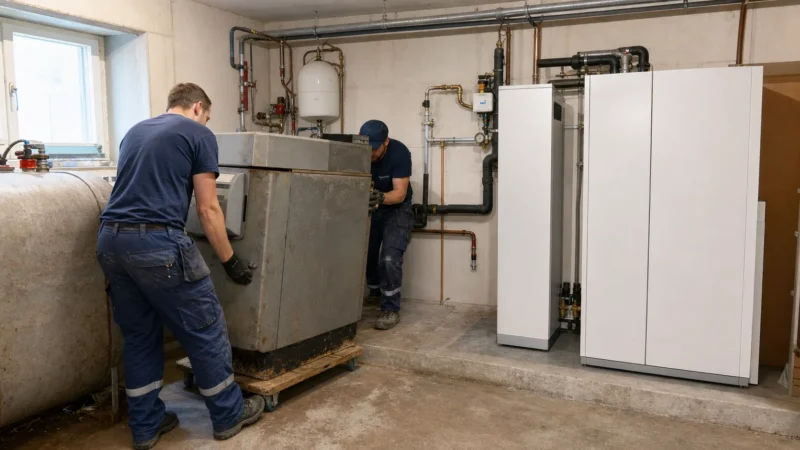
A borehole heat pump (brine-to-water heat pump) uses heat from the ground. Because temperatures at depth remain stable throughout the year, it operates very efficiently – even in winter. The price to pay: It is more intensive in terms of permits and planning than an air-to-water heat pump, and not every location is suitable. Whether it suits your property is decided early on – regarding drillability, geology and permit.
The most important points in brief
- utilises the constant heat in the ground via vertical boreholes
- Drilling, geological suitability and permit are the key points
- Not every location is approved (e.g. in groundwater protection zones)
- Higher investment than air-to-water, but often higher efficiency
- very quiet, no visible outdoor unit, long service life of the borehole heat exchanger
- implementation takes longer because a permit and drilling are added
- As of 12.07.2026
- Sources at the end of the article
How does the borehole heat exchanger work?
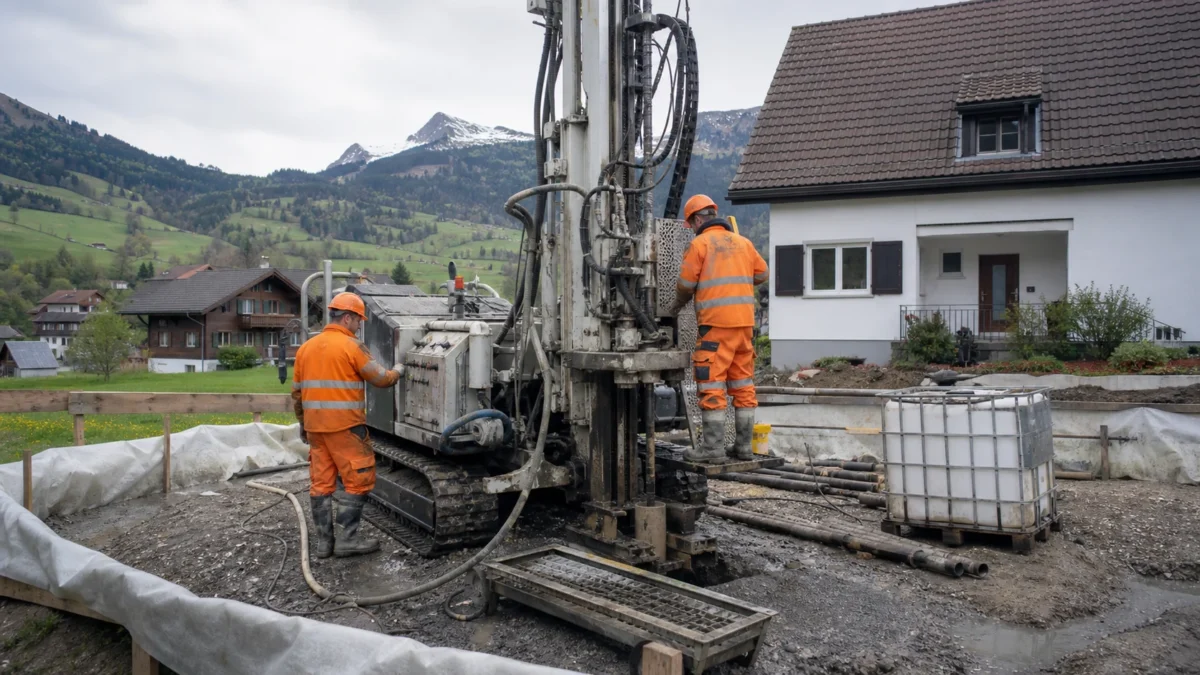
In one or more vertical boreholes – usually around 100 to 300 metres deep – a frost-protected brine fluid circulates. It absorbs heat from the ground and carries it to the heat pump, which raises the temperature level for heating and domestic hot water. Because the ground temperature barely drops in winter, efficiency remains comparatively stable throughout the year.
Drilling and geological suitability
First of all, the question is whether drilling is permitted at the site and what the ground conditions allow. Depth, number of borehole heat exchangers and drilling effort depend on geology and heat demand. Many cantons publish maps showing where borehole heat exchangers are permitted, restricted or excluded. This should be clarified at the very beginning – before you commit to a borehole solution.
Compare quotes for free Are you considering whether a borehole is possible at your location? You can submit your request via waermepumpen-guide.ch free of charge and without obligation. Your request will be forwarded to up to three suitable specialist installers in your region, who will check the drillability and suitability and prepare individual quotes. Compare quotes for free
Permit
Borehole drilling is subject to permit requirements. The cantonal environmental office or cantonal geology office is usually responsible. Key factors include groundwater protection, geology and distance requirements: In strongly protected groundwater zones, boreholes are often not permitted at all or only with a hydrogeological expert report. The procedures take several weeks depending on the canton. This information is an overview and not legally binding advice – what specifically applies will be clarified by the specialist installer with the relevant authority.
Costs
As of July 2026. For a single-family home, a turnkey borehole heat pump costs roughly CHF 50’000–80’000. A large part of this is due to the drilling. These guidelines do not replace a quote:
| Cost factor | Note / guideline |
|---|---|
| Drilling | largest single block, often approx. CHF 15’000–25’000 (depth, geology, number of boreholes) |
| Heat pump (unit) | depending on output and manufacturer |
| permit / expert report | cantonal; hydrogeological report possibly additional |
| decommission old heating system | relevant when replacing oil/gas heating systems |
| Storage, electrical, hydraulics | as with other heat pumps |
Due to higher efficiency, running costs are often lower than with air-to-water systems – this can offset part of the additional investment over the years. An overview is provided by What does a heat pump cost in Switzerland?, and for consumption see Electricity consumption of a heat pump. Subsidies are regulated at cantonal level and not guaranteed; the application must usually be submitted before construction begins (see Heat pump subsidy Switzerland 2026).
Have drilling and permitting costs calculated transparently Especially with borehole heat exchangers, it is worth having several specialist installers assess drilling, permits and the work involved. Through waermepumpen-guide.ch you can reach up to three suitable specialist installers from your region – free of charge and without obligation. Compare quotes for free
Advantages and disadvantages
| Category | Points |
|---|---|
| Advantages | high, stable efficiency even in winter, very quiet, no visible outdoor unit, long borehole heat exchanger lifespan |
| Disadvantages | higher investment, permit requirement, site-dependent suitability, longer implementation time |
Compared with the air-to-water heat pump, the borehole excels primarily in efficiency and quietness but requires more planning and a suitable plot of land. Which solution is appropriate depends on the location, building, and budget – one type is not inherently “the best”.
Efficiency
Because the heat source in the ground is constant, borehole heat pumps achieve higher seasonal performance factors (SPF) than air-to-water units under good conditions. How high the seasonal performance factor (SPF) – the ratio of heat generated to electricity used – actually turns out to be depends on design, flow temperature and drilling. A precise sizing of the borehole is crucial for this.
Typical errors
- Clarifying geology and permits too late. Without permission at the site, the entire plan becomes irrelevant.
- Sizing the borehole too small. An undersized borehole reduces efficiency and can cool down in the long term.
- Comparing only the unit price. Drilling, permits and expert reports should be included in the quote.
- Underestimating implementation time. Permit procedures and drilling require lead time.
- Forgetting dismantling. It is an additional task when replacing an oil or gas heating system.
Checklist before the quote
- Check (or have checked) whether drilling is permitted given local geology and groundwater protection requirements
- Clarify heat demand and appropriate borehole depth/number
- Note down the permit process and responsible authority
- Drilling, equipment, storage, electrical work and dismantling as separate items
- Subsidy options in canton and municipality
- plan a realistic timeline including procedures
The borehole heat exchanger is the most common heat source for a brine-to-water heat pump, but not the only ground-coupled solution. Where usable groundwater is available, a water-to-water heat pump can be an alternative. In both cases, the heat pump must be sized appropriately.
When is it worth comparing multiple quotes?
With boreholes, the biggest differences arise in drilling, borehole sizing, permit effort, equipment and subsidy assumptions. A comparison of several specialist installers makes these visible and helps find the right solution for your property. Two to three complete quotes are usually sensible for this. What you should pay attention to is shown in the checklist for comparing quotes.
Conclusion
A borehole heat pump is particularly interesting when long-term efficiency and quietness are priorities and the site is suitable. Because geology and permits play a major role, early clarification is worthwhile – as is a quote that transparently lists drilling, permit and effort costs. Multiple offers help compare the differences realistically.
Compare heat pump quotes Via waermepumpen-guide.ch, you can submit your request free of charge and without obligation. Your request is forwarded to up to three suitable specialist installers in your region who check drillability, permits, and performance and create individual quotes. Compare quotes for free
Frequently asked questions and answers
Does a borehole heat exchanger require a permit?
Yes. Borehole drilling is subject to permit requirements; the responsible authority is usually the cantonal environmental office or the cantonal geology office.
How much does a borehole heat pump cost?
Turnkey costs for a single-family home are roughly CHF 50’000–80’000. A large part of this is due to the drilling (as of July 2026).
Is it more efficient than an air-to-water heat pump?
Often yes, because the heat source in the ground is more stable. The actual efficiency depends on the design and drilling.
Is a borehole heat exchanger possible everywhere?
No. Location, geology, and groundwater protection are decisive. In some zones, boreholes are restricted or not permitted.
How long does implementation take?
Longer than for air-to-water heat pumps, as the permit process and drilling are added. A realistic timeline should take this into account.
Sources and further information
- SwissEnergy / Swiss Federal Office of Energy (SFOE): Fundamentals and efficiency of heat pumps
- Cantonal environmental offices or cantonal geology: Permit and admissibility of borehole heat exchangers
- The Buildings Programme: cantonal subsidy logic for heating replacement (as of 2026)
- Energiefranken: Subsidy programmes by location
- Swiss Heat Pump Association (FWS): Planning, borehole sizing, and operation