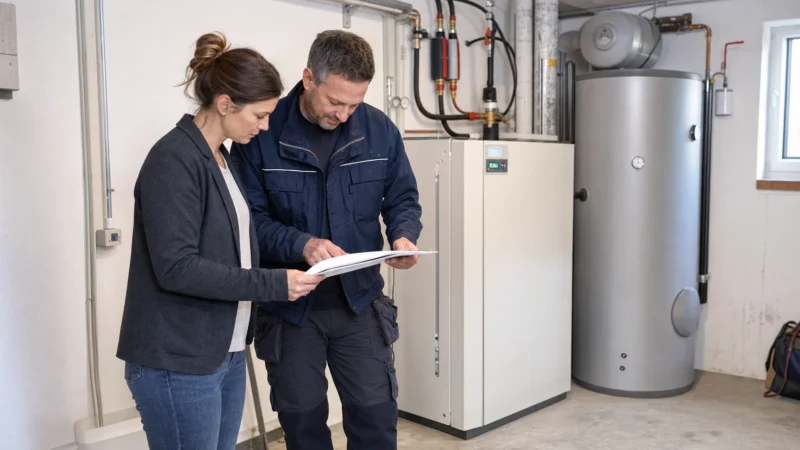
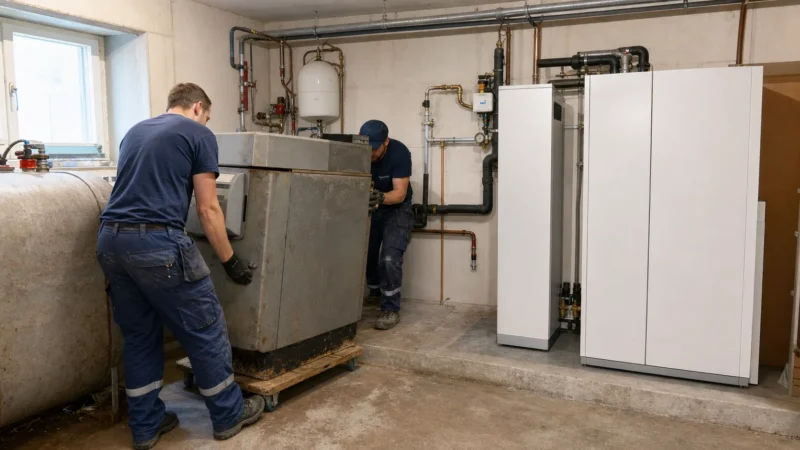
The electricity consumption of a heat pump is not a fixed value – it results from the building's heat demand and the efficiency of the system. A well-planned heat pump turns one kilowatt-hour of electricity into several kilowatt-hours of heat. An unfavourable design or a high flow temperature, on the other hand, drives consumption up. The specific operating costs depend on heat demand, seasonal performance factor (SPF) and local electricity tariff. SwissEnergy cites annual electricity operating costs for single-family homes in the range of approx. CHF 700–1'600 depending on the type of heat pump.
The most important points in brief
- The consumption is derived from the heat demand divided by the seasonal performance factor (SPF).
- Low flow temperatures noticeably reduce electricity consumption.
- The building envelope and domestic hot water demand have a major influence.
- The heating curve and settings are often underestimated.
- Photovoltaics can cover part of the electricity demand – especially in summer.
- The electricity tariff varies significantly by region and directly affects costs.
- As of 13.07.2026
- Sources at the end of the article
Seasonal performance factor (SPF) simply explained
The seasonal performance factor (SPF) shows how efficiently a heat pump operates over an entire year. An SPF of 4 means: on average, 1 kWh of electricity produces 4 kWh of heat. The SPF depends on the type of heat pump, the building, flow temperature, domestic hot water demand, design and operation. The higher the SPF, the less electricity the system requires for the same amount of heat.
How much electricity does a heat pump need?
Consumption follows a simple logic:
Electricity consumption = heat demand ÷ seasonal performance factor
A building with a heat demand of 16’000 kWh per year and an SPF of 4 therefore consumes around 4’000 kWh of electricity. If the SPF drops to 3 – for example due to a high flow temperature –, consumption rises to around 5’300 kWh for the same heat demand. It is precisely here that planning determines the running costs.
Influencing factors
| Factor | Effect |
|---|---|
| Building envelope (insulation, windows) | high |
| Flow temperature | very high |
| Domestic hot water demand | relevant additional consumption |
| Setting / heating curve | often underestimated |
| Heat pump type | medium to high |
| Room temperature | directly noticeable |
The flow temperature is the biggest lever – it is closely linked to radiators and insulation. More on this under heat pump in an older building and heat pump with radiators.
Calculate electricity costs
As of July 2026. For an official initial assessment, the operating cost guidelines from SwissEnergy are more helpful than flat-rate kWh figures:
| Heat pump type | Typical annual electricity operating costs in a single-family home |
|---|---|
| air-to-water heat pump | approx. CHF 1’000–1’600 |
| brine-to-water heat pump | approx. CHF 800–1'400 |
| water-to-water heat pump | approx. CHF 700–1'200 |
These values are guidelines. For a specific calculation, the local electricity tariff according to the electricity bill or ElCom tariff data, the expected heat demand and the planned seasonal performance factor (SPF) should be used. In addition, maintenance or inspection costs may arise depending on the system and service contract. These should be listed separately in the quote or service contract.
How investment and operation interact can be read under What does a heat pump cost in Switzerland?.
Compare quotes for free Would you like to know how efficiently a heat pump would operate in your building? Through waermepumpen-guide.ch, you can submit your request free of charge and without obligation. Your request is forwarded to up to three suitable specialist installers from your region who will assess the design individually. Compare quotes for free
Tips for saving to keep consumption low
- Lower the flow temperature: The most effective lever. Every degree saved improves efficiency.
- Optimise the heating curve: Adjust the setting to the building, do not leave it at standard values.
- Choose a realistic room temperature: A realistic room temperature can reduce consumption.
- Control domestic hot water times: Heat domestic hot water preferably during the day – especially in combination with photovoltaics.
- Check the hydraulic balancing: It ensures that heat reaches where it is needed.
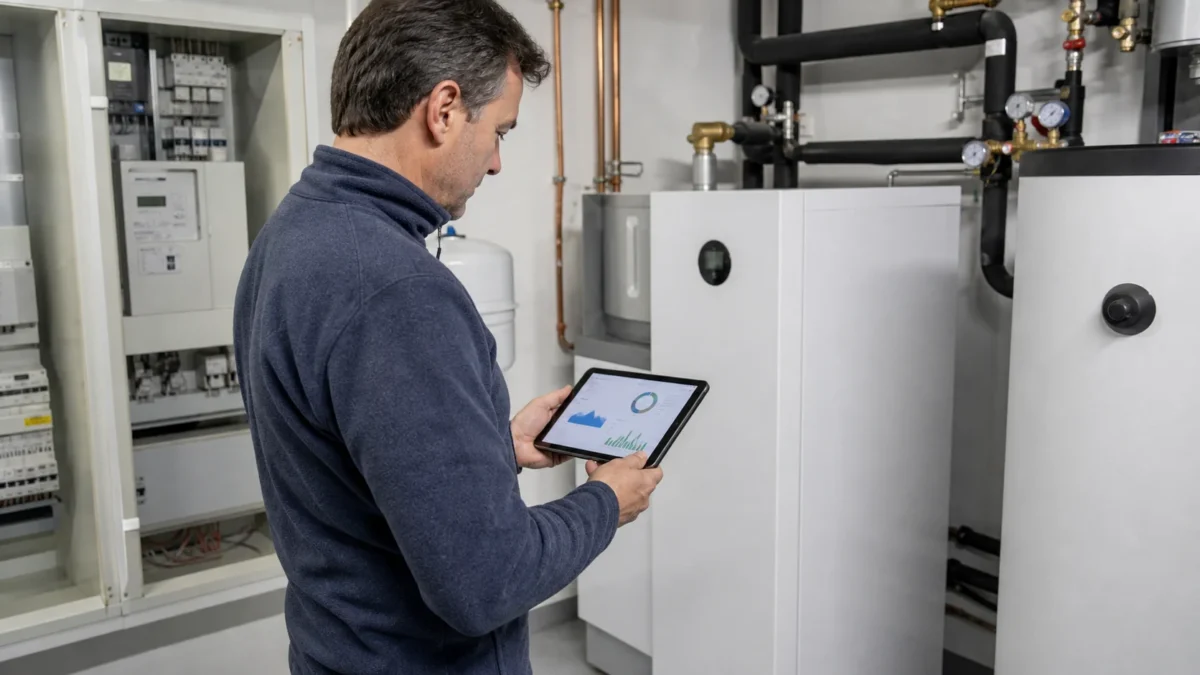
- Monitor operation: Unusually high consumption can be detected early this way.
- Integrate photovoltaics: Covers part of the electricity demand, especially in the brighter half of the year (see Heat pump with photovoltaics).
Plan efficiency from the start A good design reduces consumption over the entire lifespan. Through waermepumpen-guide.ch you can reach up to three suitable specialist installers from your region – free of charge and without obligation. Compare quotes for free
Why is my consumption too high?
An above-average consumption usually has one or more of these causes: a flow temperature that is too high, an incorrectly set heating curve, poor building condition, missing hydraulic balancing or a high domestic hot water demand. Often, settings and small measures can make a big difference without replacing the system. For older or fault-prone units, the guide Replace or refurbish heat pump helps with the decision between repair and replacement.
Checklist: Keeping consumption under control
- Assess heat demand and SPF realistically
- Set the flow temperature as low as possible
- Adjust the heating curve to the building
- Carry out (or have carried out) hydraulic balancing
- Manage domestic hot water times sensibly
- Check consumption regularly
- Know your electricity tariff and check photovoltaics if applicable
For a realistic consumption, several sub-areas must fit together: The sizing of the heat pump influences the cycling behaviour, while domestic hot water preparation with a heat pump affects the annual demand. In the case of an air-to-water heat pump, the stronger influence of the outdoor temperature is added.
When is it worth comparing multiple quotes?
Later consumption starts with planning: design, sizing and the domestic hot water solution vary from quote to quote – and influence operating costs over years. Comparing several specialist installers helps identify the more efficient solution. Two to three complete quotes are usually sensible for this purpose. What you should pay attention to is shown in the checklist for comparing quotes.
Conclusion
The electricity consumption of a heat pump is not fate but the result of planning, settings, and building condition. A low flow temperature, a suitable heating curve, and hydraulic balancing significantly reduce it. Those who consider these points from the start and compare several quotes keep running costs low.
Compare heat pump quotes Through waermepumpen-guide.ch, you can submit your request free of charge and without obligation. Your request will be forwarded to up to three suitable specialist installers from your region, who will prepare individual quotes. Compare quotes for free
Frequently asked questions and answers
How much electricity does a heat pump need?
This depends on the heat demand and the seasonal performance factor (SPF). For cost orientation, SwissEnergy quotes annual electricity operating costs of approximately CHF 700–1’600 for single-family homes, depending on the type of heat pump.
What is a good seasonal performance factor?
The seasonal performance factor (SPF) depends on the type of heat pump, the building, flow temperature, domestic hot water demand, design, and operation. The specialist installer should explain the expected efficiency specifically for your project.
What is the annual electricity cost?
SwissEnergy lists typical annual electricity operating costs of approx. CHF 700–1’600 for single-family homes, depending on the type of heat pump. For a specific calculation, the local electricity tariff, the heat demand and the expected seasonal performance factor are decisive.
Can photovoltaics help?
Yes, especially for domestic hot water and during the shoulder season. In winter, grid electricity usually remains important.
Why is my consumption so high?
Common reasons include a high flow temperature, an incorrectly set heating curve, poor building condition or missing hydraulic balancing.
Sources and further information
- SwissEnergy / Swiss Federal Office of Energy (SFOE): Efficiency and operation of heat pumps
- Swiss Heat Pump Association (FWS): seasonal performance factor, planning and operation
- Federal Electricity Commission (ElCom): Electricity prices and tariff data
- Energiefranken: Subsidy programmes by location